Roots of community - Archbishop Arseny



|
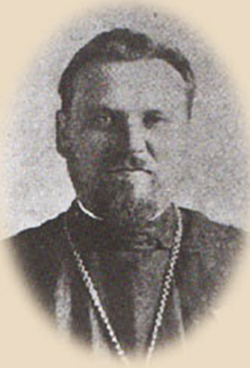
Father ARSENY (Andrij Lvovich Chahovtsov), the future Archbishop Arseny was born on March 10, 1866 in the Kharkov Eparchy (in Eastern Ukraine). He served as a priest for thirteen years before receiving monastic tonsure with the name Arseny. He became head of the Kuriansk Monastery in 1900. Shortly thereafter, he was transferred to serve in the North American Diocese, serving in numerous parishes and writing with great fervour in Vestnik. His heartfelt and burning "From the Diary of a Missionary" was eagerly read. In 1905, with the blessing of Archbishop TIKHON, he built St. Tikhon's Monastery in South Canaan, Pennsylvania.
It was Canada's great blessing to receive this able monk as rural dean and administrator for Canada in 1908. For a time he served as rector of Holy Trinity Church, Winnipeg and then St. Barbara's Church, Edmonton. He wrote, preached, traveled, comforted and exhorted everywhere he went, and his heart felt all things deeply, as expressed in his diary of experiences, portions of which were later published. Father Arseny returned to Russia and did not come back to Canada until after the Russian Civil War, having been evacuated to Yugoslavia. He would serve as a Bishop of Winnipeg and Canada, 1926 - 1937. From Holy Trinity Church in Winnipeg, he would serve Canada, founding Holy Ascension Monastery near Sifton, thirty miles north of Dauphin, Manitoba in 1926. It would serve as well as the site of an orphanage and a theology school. With unfading energy this devoted Archpastor would continue to work in retirement, attaining the rank of Archbishop in 1939. He reposed on October 4, 1945. |
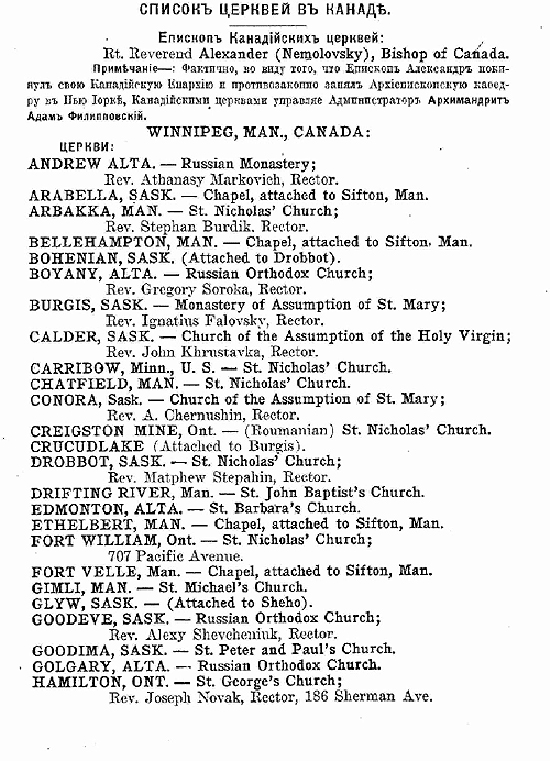
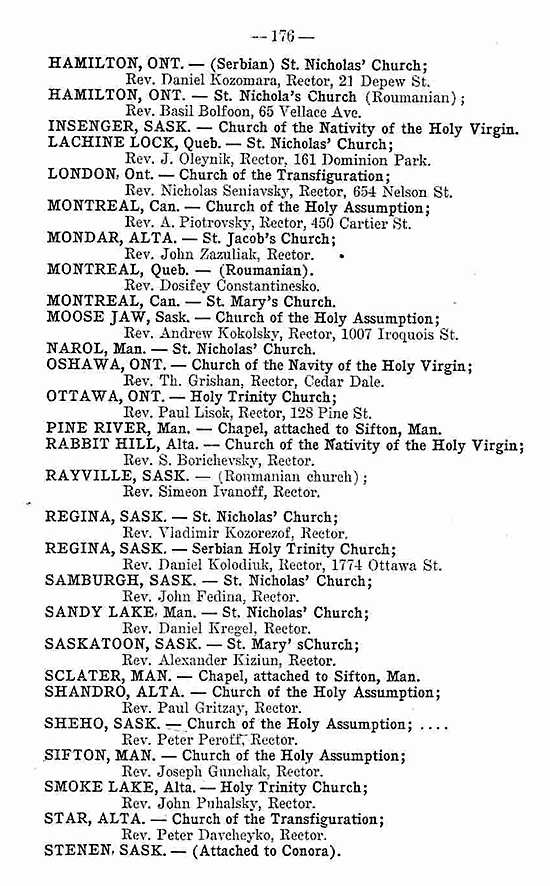
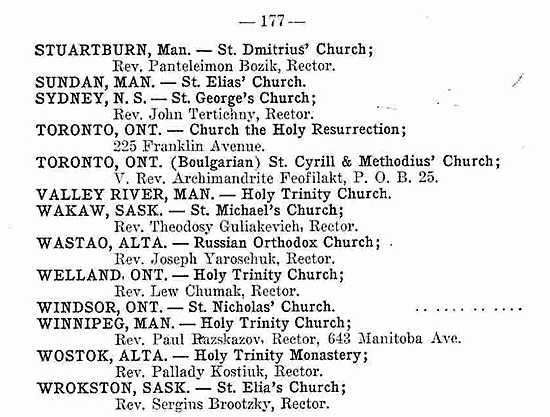
A list of parishes for 1920 contains the names of sixty-six parishes, a considerable development from the turn of the century.
A separate bishopric for Canada (Vikariatstvo) had been created in 1916, which would move from missionary status to full diocese over the years.
Under Bishop ALEXANDER (Nemolovsky) councils of clergy and laity were convened; four deaneries were established. However, with changes abroad brought by war and revolution, Canada's situation becomes a holding one at best, and it is left with no bishop for ten years.
It is at this time that ethnic jurisdictions began to a major mark of Orthodoxy in Canada for most of the century. Canadian Parishes, 1920.

|
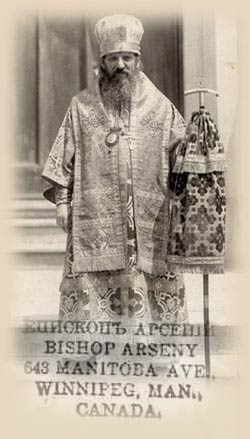
Archbishop ARSENY, the Canadian Chrysostom
As Bishop of Winnipeg and Canada, Vladyka ARSENY undertook regular visits of parishes across Canada. Many of his letters appear to be written from jostling trains and wagons. Telegraph lines connected him to parishes as there were few telephones. His visits were a great source of joy and inspiration, as he was fondly remembered from earlier days, when he had been made rural dean and administrator of the Church in Canada in 1908. He had been sorely missed in his reposting to Russia. Following the Revolution and his stay in Yugoslavia where he was ordained a Bishop, his return to Canada was much heralded. His fervent eloquence, both in writing and speech, is long remembered among those who had opportunity to hear him. He expected the people in attendance to be worshipful, and if some were tempted to visit during Liturgy in the joy of being together, the Bishop was known to remind them that they were not "bazarniki" and this was not a marketplace! Bishop ARSENY returned from Europe to a different Canada than he had left a decade before. Several factors had altered the complexion of Orthodoxy in Canada, and subjected it to considerable strain. The first was the fall of the Tsarist government, whereby practical assistance and the flow of priests for Canada were curtailed. The second was the rise of additional jurisdictions splitting the Orthodox into various sectors, so that the vision of a single Orthodox Church for Canada was dimmed. In this connection, there was also extreme animosity in various parts of the Orthodox population, which resulted in acts of violence and rejection displayed toward those representing the Russo-Orthodox Church. |

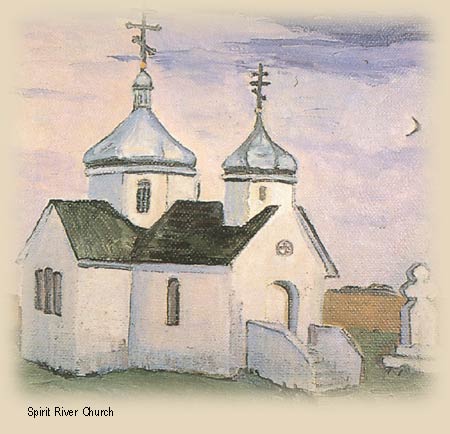
Sifton: Spaso-Vosnisiensky Monastery
Based on a 1945 Report by Igumen Makarii
"The Monastery was built in 1926 one mile from Sifton in a thicketed area--that was the year Monk Varnava was in Winnipeg from Mt. Athos. Bishop ARSENY made him the abbot there, and Reader Mitrofan (Rak) joined him. After Father Varnava was Fr. Theodore Ivasiuk, and three candidates for the priesthood: John Diachina, Peter Bondarchuk and Leontii Kiachina. Two attained to the priesthood and went to serve (Father John and Father Leontii). Father Mitrofan was left there alone and to him came a monk from Pochaev, Father Aggei. Then from Volyn in Ukraine came Effimi Moseychuk who stayed for two years,
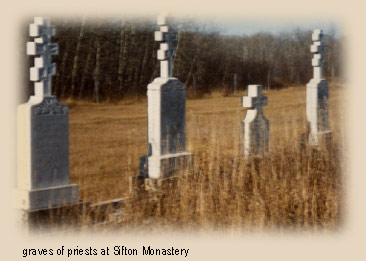
Many more came and went to other parishes. The Monastery has two Altar Feasts, one is Holy Ascension and on Holy Transfiguration, which was when the Monastery was founded. More than 200 people come out from 30-50 miles around. The order of celebration (when Vladyka ARSENY was there) was: before Liturgy, the Blessing of Water, the Liturgy, following which, Vladyka would bless the entire well, and then all would walk around all the monastery blessing, and go to the cemetery, where they would have a big parastas (remembrance) for all and then who wanted, would have a panykhyda (service for the departed) on the individual grave. Then everyone would return to the buildings and sit down to a joint feast, as everyone who came brought food. Then at four, everyone would leave the table, and go on their way, filled, satisfied and rejoicing…these were blessed times!
At that time Vladyka ARSENY was well and he flew like an eagle to the ends of Canada. The people by the hundreds came to services when he was there and were strengthened by his sermons. The monastery had horses, cows, poultry, and there were those who looked after the land and the livestock. Mitrophan built his own kelia (cell) there.
In the main building lived the nun, Platonida and a female worker. From her quarters, the fire started and burned everything: the church with its lovely altar, the beautiful Kyivo-Pecherska Gospel that Fr. Mitrophan collected funds for over a period of two years, and which weighed about thirty pounds, Absolutely everything burned! All the vestments, books, the typicon, furniture, curtains, everything. Siince then it has been a tough go, a small amount of money comes from the land and the meadow is let to a farmer for pasture. At present [1945] Fr. Ignatii Falovsky and Igumen Makarii (previously Mitrophan) live there."
A Golden Ring from Tsar Nicholas
…Bullets from His Enemies in Saskatchewan
(adapted from "Archbishop ARSENY, the Canadian Chrysostom" by Archimandrite Antonii Tereschenko, 150 Anniversary Book)
"In the history of the Orthodox Church in Canada, Archbishop ARSENY must be given his rightful place.
The Holy TIKHON [Belavin] saw the importance of placing Archimandrite Arseny as the rector of Holy Trinity Sobor and administrator of the Canadian eparchy. God gave him to complete the Church and to serve with great zeal in Winnipeg and all Canada.
With his fiery sermons and his journal, “Canadian Harvest,” he brought many Uniates to Orthodoxy…and the "Canadian Harvest" made its way even to the Tsar’s Palace. Tsar Nicholai II read his articles and for this “food for the soul” (so named by Archimandrite ARSENY) he gave to the author a gold ring inscribed with a cross from his own study. Canada really wanted to have Bishop ARSENY as their head, and had it happened 33 years ago, things could have been quite different. But as we thought, so did the enemies of Orthodoxy.
In 1910 with the departure from Canada of the Chrysostom missionary, many, with grief left for other sides. In 1926 after a long stay in the homeland and abroad, Arseny returned to Canada already a bishop. But circumstances … had changed… In the parable of the tares, the Lord Jesus Christ tells how the Kingdom of God is like unto a man who plants good seed on his land. But while he slept, his enemy came and scattered tares among the wheat and left. And the servants coming to the master, said: 'Lord! Did you not plant good seed? From whence came the tares?' He said to them: 'The enemy has done this.'
One could write a whole book describing everything that Bishop ARSENY had to endure when he came back the second time, and this would be a book of horrors. The tares had to be dealt with on many fronts, and sometimes it was hard to know who was who, who belonged to another. Things had to be endured, such as the time that those, calling themselves Christians, armed with stones….broke the windows and the door, and shot through them, where Vladyka ARSENY and his priests were gathered, preparing to celebrate Holy Liturgy in the morning [near Canora, Saskatchewan]…The civic courts punished the offenders, but they, serving their time in the flesh, did not repent in their hearts. All of this took place in order that the servant of God might pass through fiery trials, and with greater zeal would serve the Lord, and His Holy Church, remembering the promise of the Saviour: 'blessed are you when men shall revile you and persecute you and shall say all manner of evil against you falsely for My sake. Rejoice and be exceedingly glad, for great is your reward in heaven.'"
"Rejoicing in Orthodoxy in Edmonton"
From the Diary of a Canadian Missionary by Bishop ARSENY
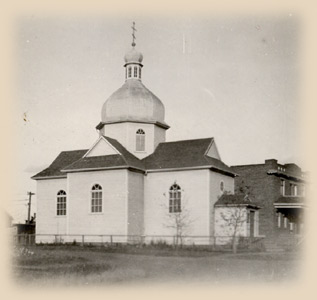
My God! How many feelings and different trepidations, from great joy to sad tears in connected with this place! Yet in the dawn of my physical and spiritual strength twenty years ago, I laboured here as the rector of St. Barbara’s Church, strengthening in the Orthodox faith our brother Galicians who had departed from the Uniate way, having returned to the bosom of the Mother Church. From Edmonton the rays of Orthodoxy shone to all the surrounds, illuminating the path to salvation. That is how the glory of Orthodoxy began at Rabbit Hill, Chipman, Mundare and surrounds. The Bukovinians were a good help, being Orthodox for many generations. Zealous for Orthodoxy among the Galicians were Gerbut, Fuyarchik, Fuhr and others, whose sincerity strengthened me. We lived quietly. Peace and love reigned, and no one dared to speak of other national things in our midst. We were brothers and lived in the hope of thus remaining.
|
Many years moved forward toward eternity…much changed. I came to Edmonton again three years ago. Among the flock have come wolves bent on separatism and nationalism. They fell upon me with bared teeth and wanted to tear me apart.
“Why did you come to torment us?” “We can get on without you.” “We have our own nationality. You are a Kirghis!” And so they brought me before the judge, beginning the whole judicial process. “The previous Edmonton is gone,” I thought. “There are no more that are zealous for Orthodoxy!” But the Lord showed me other…. 25 March, the day of the Annunciation of the Holy Theotokos on the day of the Exaltation of the Holy Cross, I saw Edmonton in the glory of Orthodoxy and understood the words, “Your thoughts are not my thoughts, your ways are not my ways.” (Is. 55:8) How many mad wolves tried to tear apart the Orthodox flock, but Fr. Antonii protected them. …the church was full of prayerful people. The beautiful artistic strains of the choir rose under the direction of Nizov, who had finished conservatory. It is hard to believe that this is Canada, this is faraway Edmonton. The readings from the two holidays—the Annunciation and the Elevation of the Cross give a rich and beautiful theme for preaching. In the center of the Church in the icon of the Annunciation where Archangel Gabriel cries: “ Rejoice, Full of Grace, the Lord is with you” and beside it, the Cross, with the Mother of God weeping, “The Child of my womb, my beloved! Simeon said in prophecy, your heart will be pierced through…” these words show us the way of Christianity. After Vespers the congregation goes into the hall—to the school filled with pictures of Biblical scenes. These pictures also confirm the words about our relating to the Lord, and looking upon them can move our hearts. It is also a sermon, an experience of the Gospel to look upon them. At 11 at night we finish our celebration of Orthodoxy, in soul’s joyfulness I go on my way in western Canada to other brothers in the faith. (1945 Commemorative Book) p. 78-79 |