Roots of Community - Early Spiritual Needs



|
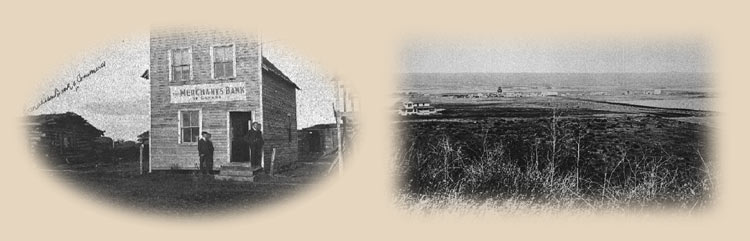
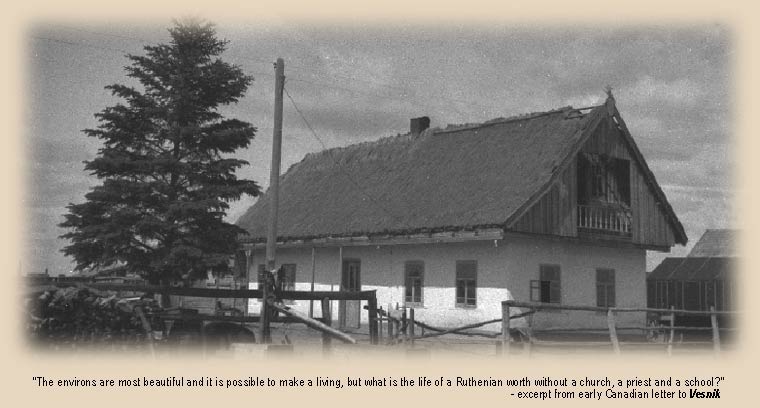
How could the faith be lived in the new land? Besides keeping the church’s yearly cycle with its feasts, fasts and saints’ days, there were many pressing needs—to baptize children, to bury the dead, even to marry in the new land. By 1896 there were more than seventy families settled in the area near Edmonton wanting to establish parish life, intent on having a place to gather for worship and cemeteries for burial. When their appeal met with success in 1897, the first visit of an Orthodox priest, Father Dmitri Kamnev, brought out huge numbers—600 persons at the Nemirsky farm gathering near Limestone Lake (later known as Star) and nearly 100 persons at Theodore Fuhr’s farm near Rabbit Hill (Nisku). By the time western Canada was being settled, Slavic immigrants were also establishing themselves in rural Minnesota, Russians and Greeks were populating the Seattle area, and swelling numbers of central Europeans were settling in the eastern U.S., particularly New York and Pennsylvania. Many of these were, or would become, adherents of the Orthodox faith. It was a period of great re-grafting into the Church of those who were previously Uniate.
In 1870, a separate Diocese of the Aleutian Islands and Alaska had been created that had formalized the work of the early Alaskan missions and the growing church on the American continent. "Russo-Orthodox" was a contrived term that implied the common Kyivan roots of all eastern Slavs, as opposed to specifically Russians or Ukrainians. Various bishops assigned to the new Diocese would left their mark on the Church’s development, most notable among them Bishop TIKHON (Belavin), later Patriarch of Moscow and canonized a saint in 1989. |
|
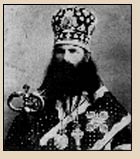
Archbishop Vladimir (Sokolovsky-Avtonomov), who served the Diocese from 1888 – 1891, was a devout bishop, a linguist and musician. He was the first archpastor to traverse the entire continent, making three transcontinental Episcopal journeys, serving both the Orthodox and dialoguing with those of the Unia (Eastern Catholic) faith who were seeking to be reunited to Orthodoxy.
For America he set his English translation of the Divine Liturgy into the common chants of the Russian liturgical tradition, making the use of English language increasingly possible. |
|
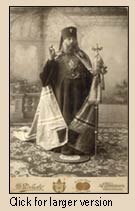
Bishop Nicholas (Ziorov), who succeeded Archbishop Vladimir (Sokolovsky-Avtonomov), expanded the diocese with more parishes. He also visited Alaska, and he would be the first Orthodox bishop to visit the young Canadian parishes.
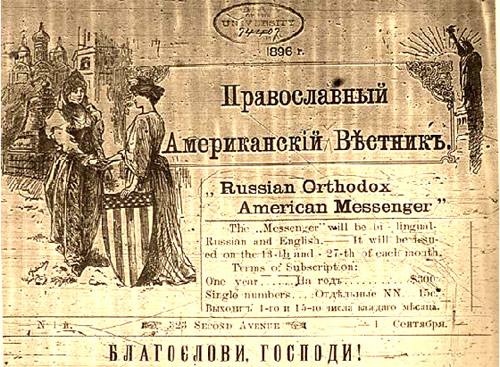
Through his efforts the Russkii-Americanskii Pravoslavnii Vestnik (Russian American Orthodox Messenger) an English-Russian bimonthly, began publication. As a journal of church activity, with articles, printed correspondence, appeals for parishes, reports on settlers’ lives and the travel of clergy, Vestnik did much to extend the vision of the Church, encouraging a united effort for Orthodox growth. When St. John of Kronstadt’s famous diary, My Life in Christ was published in English for the first time in April, 1897, Vestnik informed its readers that the Bishop Nicholai had bought two hundred copies for distribution,”the book will prove most useful to our Orthodox missions in America and Japan, and it should generally become widely diffused among Orthodox readers who know English.” During the time of Bishop Nicholai, the Orthodox mission school was moved from San Francisco to Minneapolis, which would serve to benefit the Orthodox faithful over the Canadian border. |

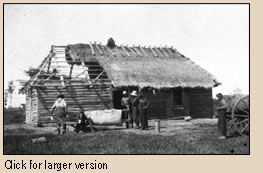
In the new Canadian settlements were various settlers, some literate and some with theological training who were willing to take the lead in establishing churches.
Among these were the Nemirskys of Star, Thedore Fuhr in Rabbit Hill, Stephen Shandro near Lamont, Zaharia Malchean of Pakan, Dymetro Derhak of Sandy Lake and others.
Shortly after their arrival the settlers sought to connect to the Church.
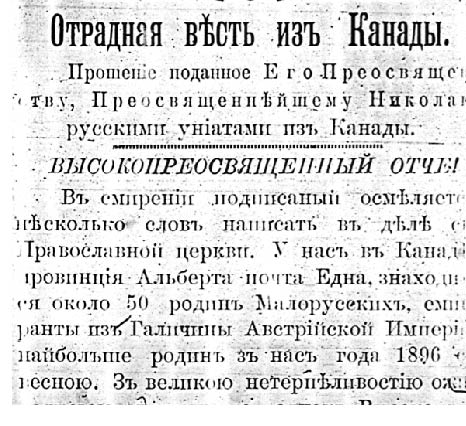
A formal appeal was made by the Ruthenians of the North West Territories to Bishop Nicholai for acceptance into the Diocese.
Canadian circumstances paralleled the Orthodox experience in Minnesota, in which many families that had been Uniate in the Old Country, chose to return to the Orthodox Church, encouraged by theologically articulate men such as Fr. Alexis Toth in the United States; here the eloquent Alberta pioneer, Theodore Fuhr, was especially instrumental.
The re-grafting process involved an exchange of communication between the hierarch and the community, including a request for clergy, petitions to form a parish, and eventually, steps taken to acquire land and buildings.
|
Other appeals were forthcoming, and with practically each issue, Vestnik carried progress reports on Canada. In the meantime, Bishop Nicholai having accepted the Canadian appeals, prepared to send the first mission priests to visit them, ideally in the summer months, when travel would be easier. As Vestnik reported, “from the depths of our souls we welcome the good request of our Ruthenian brothers in Canada…and about their lives and experiences in that country we will write in future issues.” The first trip was set for July, 1897. |