Roots of Community - Land and People




From the 1790s, there were Russian Orthodox missionaries in Alaska brought by the early fur trade who began building an indigenous church in Kodiak and beyond. By the turn of the twentieth century, there were nearly 15,000 native Orthodox Christians there, spurred forward by the work of able missionaries. Especially notable was the energetic Bishop Innocent of Alaska.
"He arrived in the Aleutian Islands in 1824 and at first lived in a mud hut on the Island of Unalaska. By his labors a church was built there. He learnt the Aleutian language and translated the Gospel of St. Matthew, the text of the Divine Liturgy and the Small Catechism into it. He opened a school for boys in which he himself taught from textbooks prepared by him. For ten years, living on the Island of Unalaska, he visited the islands in a small canoe, and not for one day did he cease from his apostolic labor. In 1834 he was transferred to the Island of Sitka, built St. Michael’s Church there, and the first Orthodox seminary on American soil. When he was widowed, he was called to serve the church as bishop, which he carried out in Alaska. At the end of his life with failing health and being almost blind, this distinguished missionary returned to Russia and died as Metropolitan of Moscow."
Metropolitan IRENEY on the 175 anniversary of Holy Orthodoxy in America, 1794 - 1969.
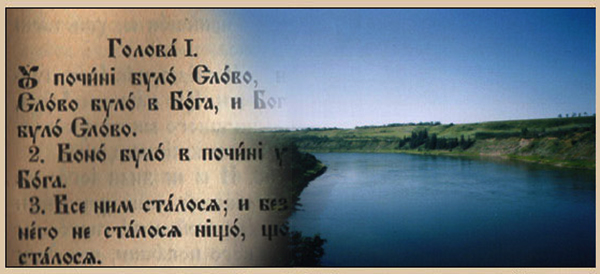
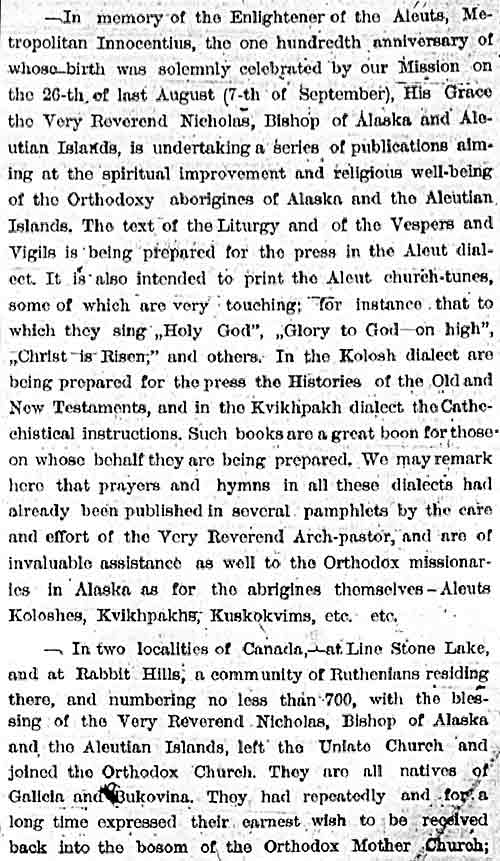
Here, an Article on celebration of the 100th anniversary of Metropolitan Innocent's birth, refers to the use of the Aleutian language.
Among the ones who came to Alaska was the monk, Herman, of Valamo Monastery in Russia. He lived simply among the indigenous peoples of the North defending them against unfairness in the fur trade. In time, he and others would be canonized North American saints. Gradually, the faith spread along the western California coast and along to other portions of the United States.
In the 1870s there were Syro-Lebanese merchants in Lennoxville, Quebec (near Sherbrooke) who were Orthodox. Priests traveled from the United States to meet their spiritual needs. Services were held at Bishop’s University, a college that dates to 1843.
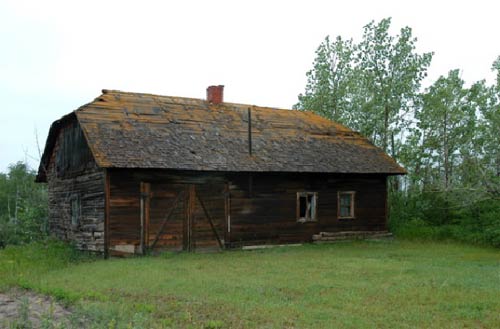
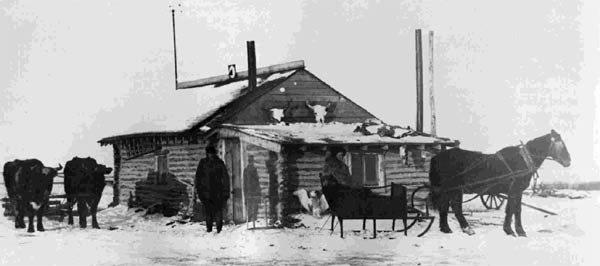
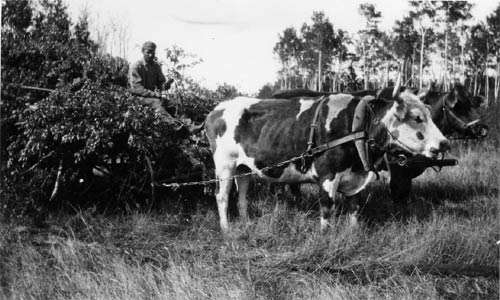

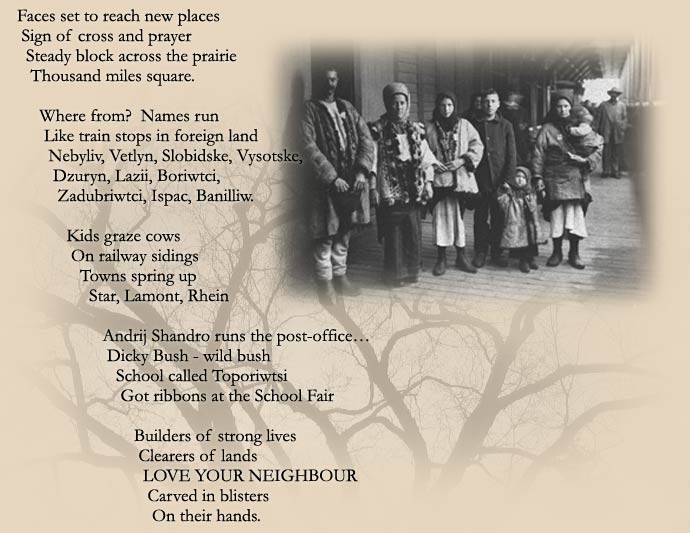
Just prior to the onset of the 20th century, Canada opened its doors to immigrants from various lands with its twin policies of railway building and homesteading. Orthodox immigrants were among those who came. The majority of them were from parts of the Austro-Hungarian Empire, Russia and Romania.
They settled mainly in rural areas of western Canada that offered plenty of space. Much of the land was fertile, even resembling the black earth (chernozem) of parts of Ukraine. There were plenty of trees for fuel needs in the parkland areas.
Ernest W. Hubbell, Dominion Land Surveyor in 1894 gave this description of the land around Edmonton and how much it would cost to set up to farm: “About 55 percent of the country is prairie. In some places the country is heavily timbered, in others lightly wooded, again in other parts beautiful grassy plains, surface is generally undulating, except when broken by the Beaver Hills or by the deep valley of the Saskatchewan River…horses…are worth generally $65 to $90, dressed beef is worth to the farmer 5 cents per pound, cows from $25 to $40…chickens, ordinary breed, $1 per pair. Binders cost $175, seeders $80, breaking ploughs $20, harrows $15, wagon $75…wheat brings 40 to 50 cents per bushel, eggs 20 to 30 cents per dozen…hay $5 delivered in town.”
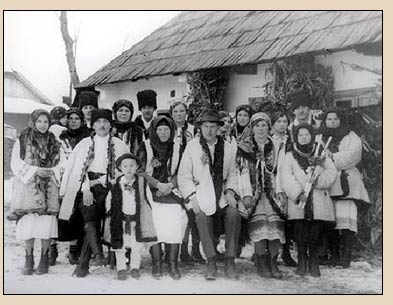
In 1890, one of the first Romanian immigrants to Canada, Nicolae Zora, settled in the Regina, Assiniboia area. By the next year, there were thirty Romanian families homesteading in the district.
“Ruthenian” was used at the time to describe people of a particular western Ukrainian culture and dialect, those from the Sian River Basin of Galicia. It was often applied in a general way to most Slavic settlers in western Canada, including Galicians, Bukovinians, Carpatho-Rusyns, Volhyns and Lemkes. Immigration from Russia, Ukraine and other parts of the central Europe was a particular policy of Clifford Sifton, Minister of the Interior, 1896 – 1905, as he attributed special value to the hardiness of “the settlers in sheepskin coats.”
In the 1901 census, there were thirty-nine people of Greek descent in Canada. By 1910, immigrants from Greece and the Middle East were settling in Canada’s larger centers especially Montreal, Toronto and Vancouver. In between the towns and farms, Syrian Orthodox peddlars travelled the prairies with their wares, stopping at the homes of Galicians, Bukovinians, Russians, Romanians and other settlers across the plains.


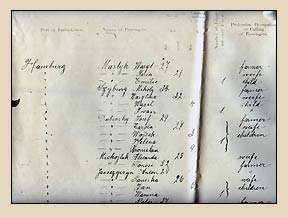
What did they bring with them? Dried bread for the journey, icons, precious embroideries, homemade scythes, garden seeds and tools. Most important, they carried their faith from their home regions, undertaking their journey with every intention to continue their lives as Orthodox Christians. It was approached with trepidation but also with faith, as in the case of settler, Dmytro Derhak, of Panivtsi, Galicia (near Borschiw) who travelled 600 versts, the equivalent of 400 miles, on foot to Kyiv to venerate the saints of the Pecherska Lavra, the Holy Caves, before he left for Canada in 1903 to settle at Sandy Lake, Manitoba.
North-west of Winnipeg, in a hilly region 195 miles away, is a town known as Sandy Lake, Manitoba, with a population of 470. In the first years of the twentieth century persecution and hardship drove our people from Western Ukraine to a distant, unknown country—Canada. From the villages of Kudrintsi and Panivtsi in the Borschiw region, a goodly number of people came to this district and took homesteads for themselves, to improve their life’s situation.
The beginnings in this impassable forest, without a roof over their heads, made it necessary to make dwellings by digging a hole ten feet wide, 15 feet long and 7 feet deep, and to cover it over with logs, and over the top of that with sod, leaving on the south side leaving a small opening for a door. This was the first home, known to the older people as a zemlianka or burdai. There was a kitchen, a bed to sleep on, and everything relating to life was all kept in there, as in a root cellar. When the weather flourished, it was even pleasant in the burdai, a veritable king’s palace, but when it rained, there was no place to hide it leaked everywhere!
Among these immigrants from Panivtsi was a talented cantor of blessed memory, Dimitri Derhak, a faithful believer. While still in the Old Country, he covered 600 versts on foot in ten days to say his farewells, going to Kiev to bow before the saints of Pecherska Lavra, and to abide for a time in the caves under the Lavra where the relics of our holy ones are found in great numbers.
As time passed, these pioneers organized a church parish and built a church on a fine promonitory by a lake in honor of St. Nicholas….
Father E. Moseychuk, Kanadskii Pravoslavnii Kalendar (Canadian Orthodox Calendar), 1962 (Translated from Ukrainian)
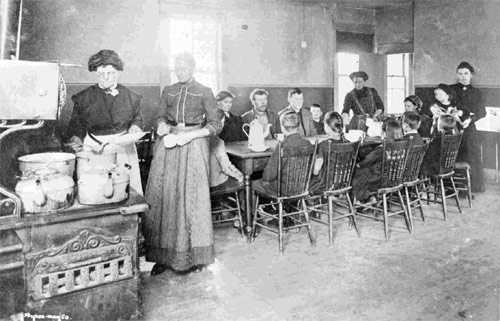
The settlers were drawn by the promise of homestead lands, free for an entry fee of ten dollars and the fulfillment of cultivation, livestock and residence requirements. The land was fertile and wooded, holding a promise of a better livelihood than in overcrowded western Ukraine. The "biga" was a tool every pioneer knew, an iron root-grubber that one turned by hand. For those who came, by ship and then by train via eastern Canada to the West, the way was long. Campaigns such as those led by Dr. Josef Oleskow drew settlers to settlers to Canada by organized means, and the railways offered seasonal work, hard though it might be, but a source of needed cash.
They came west to Immigration sheds at Winnipeg, Brandon, Yorkton and Edmonton, where they were allowed to stay, sleeping on floors, while the men went to claim homesteads. Communities grew where settlers met. Block settlements were formed on the prairies. Here the first missions of the Church would be formed in the North-West Territories (later Alberta), near Edna and at Rabbit Hill, as settlers began to appeal for church services and clergy that they might continue the faith.
The translation of the Galician/Canadian Song (excerpt from turn of 20th century immigrant song, author unknown)
When I was leaving for Canada I bowed low to the ground “Be in good health, Galicia, You are my native mother!” God knows whether I will Return to you to die. |
O Canada, little Canada! How beautiful you are! Not one of your citizens Wander around with a bag, begging! |
In Canada it’s good to live But you have to labour But you have to work… You cannot be lazy… Trembling willows here And cabbages the size of colanders… |
Mrs. Frances Bilokreli says, “And what were the rest of those words? O Canada…oh, yes…[and she sings] and then, “wait, this isn’t here…. you must work, you cannot be lazy…” [then she sings it.] “And that’s it, I finished it. But you know, you can add to this kind of a song. It’s that kind. You can ask your mother, maybe your Baba, and you can add to it a little bit, you know…” (taped at Yorkton by Zenovia Semeniuk, 1973)
For some, the new land allowed a freedom of worship not allowed in the ancestral home. It also offered the chance to interact with neighbours who might be English, Swedish, Russian or another nationality. Or if they were Ruthenian, they could be Ruthenian Orthodox or Ruthenian Uniate (Eastern Catholic). The prairies were a checkerboard—some parts an instant society, with a family on every quarter-section, and the rest still empty except for forests, sloughs and the odd cut trail through them - but even the settled part was curiously devoid of any community infrastructure in the form of churches, schools, hospitals or any semblance of municipal organization. These depended on what the settlers would organize for themselves.
Neighbour needed neighbour, even if they did not speak the same language. Or if they spoke the same language it might be in unique, dialectical ways. Like the land itself, the prairies were a broadening experience.
Much-Welcomed First Nations’ Hospitality given Slavic settler (in Ukrainian) and its translation
(interviewer): “You were saying when your Father went to Indian Head, Saskatchewan for work where did he stay overnight?”
(Mrs. Bilokreli): “With the First Nations. They stayed overnight with them….the natives took out a copper cross, kissed it and gave it also to them to kiss. Tato [Father] and his friend had $76 dollars with them and they were a bit afraid, and the other fellow didn’t want to sleep, but my father said, “sleep or don’t sleep, I’m going to sleep!” And they had the money with them but nothing was taken. There were some fierce Natives at that time, but these were very friendly…. in the morning they gave them korzhi [ in Ukrainian, little biscuits, but probably bannock] and water….They gave them what they had. They were very hungry.
(interviewer): “Who was hungry? Your Father?”
(Mrs. Bilokreli)): “Yes, Tato . And them, too. What do you think? What did they eat? They shot game and ate it. They had some grease in a pail, too. Gopher grease it seems.
(interviewer): “Who had the cross?”
(Mrs. Bilokreli): “The natives did. They had a copper cross. Because they believe in Christ also. Oh, yes. They do.” (taped in Yorkton by Zenovia Semeniuk, 1973)
Yet, not all encounters were pleasant. Those who served as translators and other "helpers" around the Immigration sheds occasionally took advantage of or abused the newcomers. Father Dmitri Kamnev who visited the early settlements in the late 1890s recalled:
…it breaks the heart to see the behaviour of some of these assistants … A Bukovinian, getting off the train, was carrying in his hands an icon of the Saviour. The translator, Mr. W. asked him in Ukrainian, "what is that?" "Do you not know this is the icon of our Saviour?' the man replied…" And you believe in such foolishness?" replied the agent, and in front of all, kicked the image and broke it. The poor, Orthodox Bukovinian wept, "What have you done, this holy icon my late father brought from Kiev!" But what does the assistant believe in that he would care…but the dollar?
Vestnik, 15/27 August 1899.